Latest posts
-
Beyond the Bloat: Why Embla is the Only Carousel You Should Use for WordPress & React in 2026
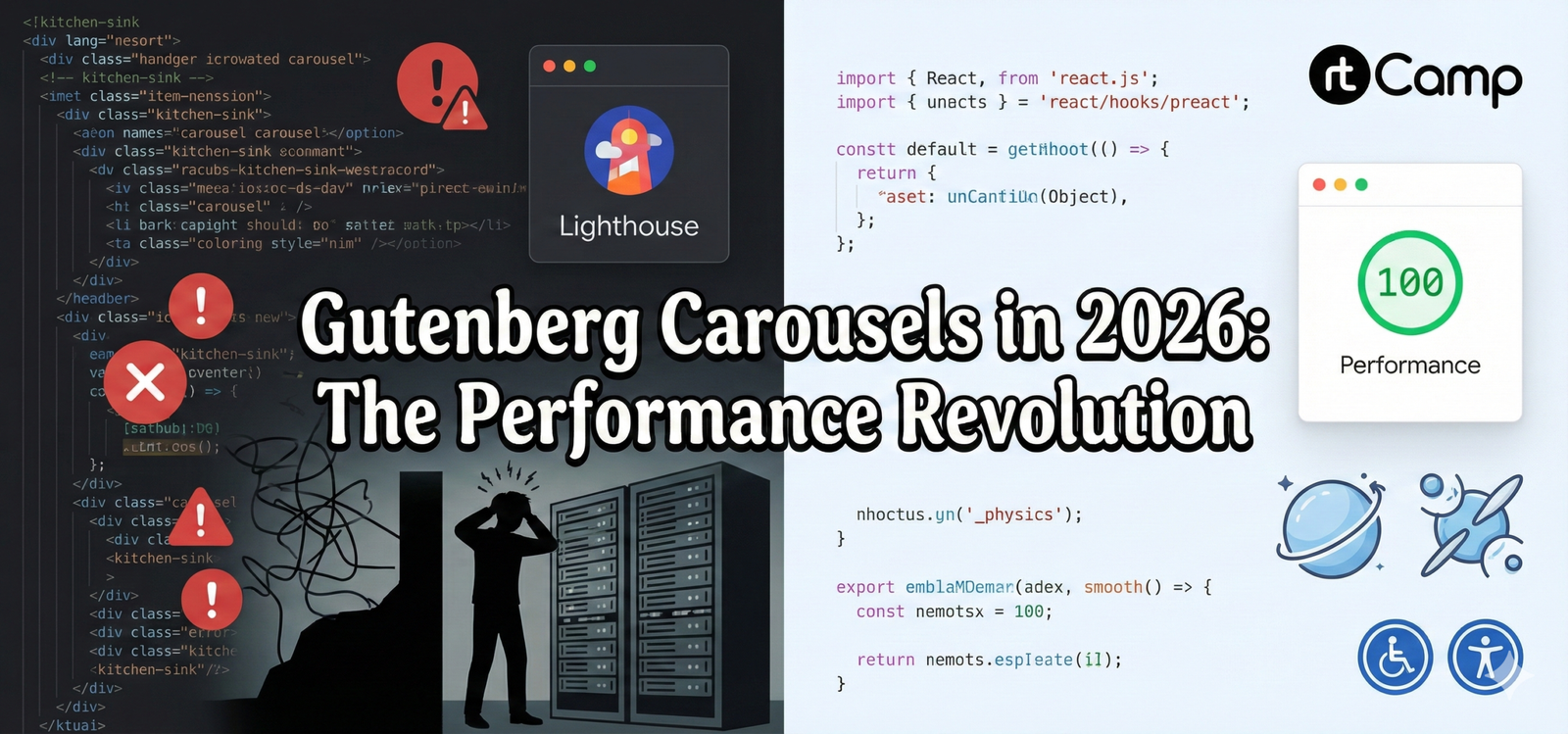
If you’ve spent any time building custom Gutenberg blocks, you know the “Carousel Curse.” You find a library that looks great in a demo, but the moment you drop it into the WordPress editor, your Lighthouse score plummets, and your console fills with layout shift warnings. You end up in a deep rabbit hole—and climbing…
-
Complete Guide to Setting Up CI/CD and Server SSH for Deployment
IntroductionContinuous Integration and Continuous Deployment (CI/CD) automates the process of building, testing, and deploying applications, reducing manual errors and improving efficiency. In this guide, we’ll outline the step-by-step process for setting up CI/CD and configuring SSH for seamless deployment to a standalone server. Part 1: Configuring CI/CD for Your Repository Step 1: Setup a GitHub…
-
Making Full Site Editing (FSE) Responsive for Mobile and Tablet Devices in WordPress
With the advent of Full Site Editing (FSE) in WordPress, creating responsive websites that adapt seamlessly to mobile and tablet devices has become more integral to the theme development process. Unlike classic themes where developers largely controlled CSS media queries directly, FSE emphasizes block-level styles and responsive design patterns within the WordPress editor itself. Here’s…
-
Understanding theme.json, Classic Themes, Hybrid Themes, and Child Themes in WordPress
WordPress theme development has undergone a significant transformation with the advent of Full Site Editing (FSE). This shift has introduced new tools and methods, such as the theme.json configuration file, which offers a more standardized and flexible way to define global styles, theme settings, and customizations. In this blog, we’ll dive deep into theme.json, compare…
-
Creating a New FSE Theme with the Site Editor: Internationalization and Accessibility Best Practices
WordPress has undergone a massive transformation over the past few years, moving towards a block-based approach to theme development. With the introduction of Full Site Editing (FSE), developers can now build themes using the Site Editor directly, eliminating the need for traditional PHP-based templates. This blog will guide you through the process of creating a…
-
Understanding Block Patterns, Templates, and Template Parts
Block themes in WordPress have revolutionized how websites are designed and managed, especially with the introduction of Full Site Editing (FSE). These themes allow users to build dynamic layouts using blocks, templates, and template parts without the need for complex coding. This post will break down the process of how block theme templates load, and…
-
WordPress Site Editor, Theme Blocks, and Block Theme Setup
With the introduction of Full Site Editing (FSE) in WordPress, the way we design, build, and manage themes has transformed significantly. The Site Editor, Theme Blocks, and Block Themes are at the heart of this revolution, giving users and developers new, intuitive tools for creating highly customizable websites. In this blog, we’ll explore these features…
-
Understanding Full Site Editing (FSE) in WordPress
With the introduction of Full Site Editing (FSE), WordPress continues to evolve, offering greater flexibility and control for both developers and content creators. FSE, built on the foundation of the Block Editor, empowers users to edit and customize every aspect of their website using blocks, transforming the way WordPress themes and templates are created and…
-
Registering a Custom Post Type & Restricting Access in WordPress
In this blog, we’ll take a deep dive into the process of registering a custom post type (CPT) in WordPress and managing access restrictions. We’ll walk through the code to register the CPT “Custom Posts” (slug: rt-custom-posts) and restrict access to Gutenberg, with custom columns for post metadata. We will explore each function used to…
-
Building a Searchable Taxonomy DropDown Component for WordPress Gutenberg
In this blog post, we’ll dive deep into the creation of a customizable, searchable dropdown component for selecting terms from custom taxonomies in a WordPress Gutenberg block. This component is particularly useful for projects that require users to filter or select terms dynamically, enhancing the user experience and making content management more intuitive. Overview of…